Farming in Service to Life - September Newsletter
Kia ora,
Most farmers who want to plant trees hit the same wall. Pine earns carbon credits fast, but a pine monoculture does little for the overall health of the land. Natives restore it, but cost more and earn less.
In Central Hawke's Bay, Greg Hart found a third way - and it's changing how farms across Aotearoa think about trees.
Meet Mangarara
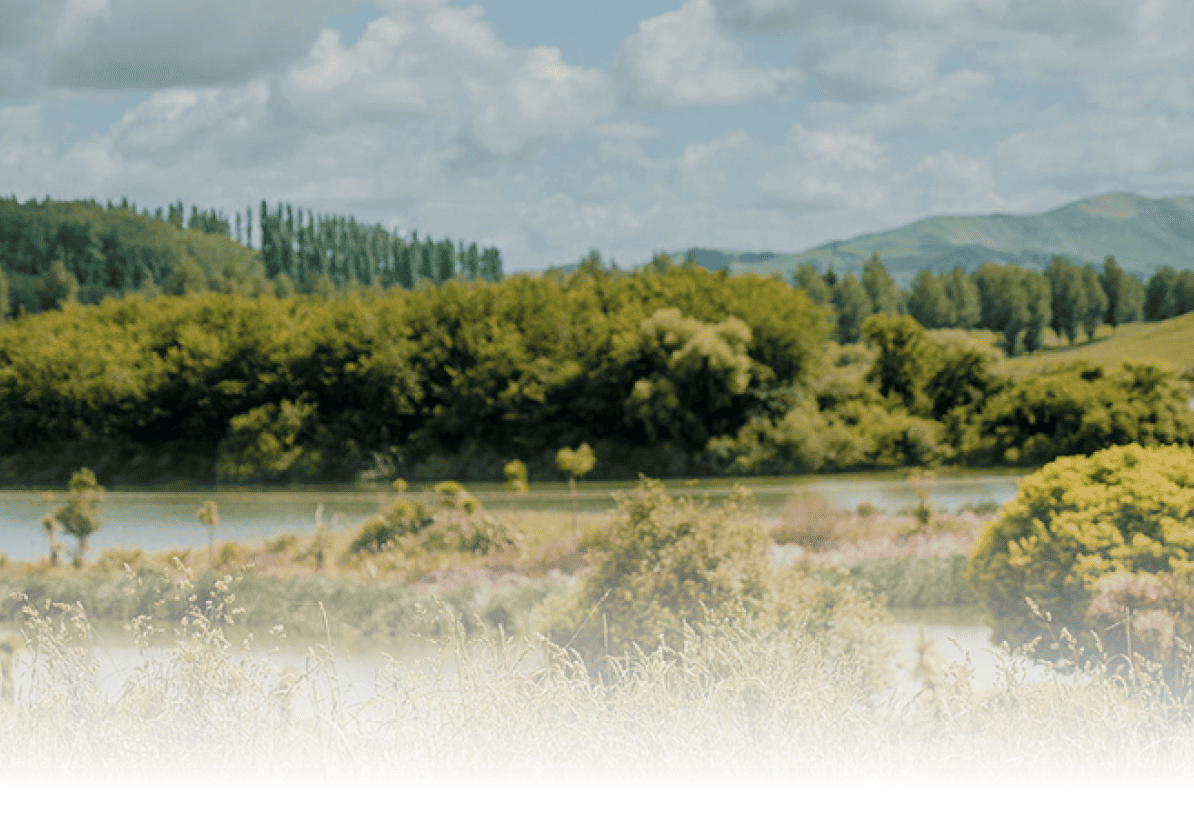
At the end of a dirt road near Elsthorpe, Mangarara is about 600 hectares of lakes, farmland, and steep hill country. Around 150 years ago it was covered in native forest, and its wetlands were alive with birds - until European settlers cleared the land and drained the flats by hand in the late 1800s. By 1990, when Greg's parents bought it, it was a conventional sheep station running around 3,000 ewes - and Greg, raised farming near Methven, ran it the textbook way.
The turning point
After Greg and his wife Rachel had their first child in 2000, the question changed: not how much the land could produce, but what they would leave behind. It sparked a journey into holistic grazing, regenerative farming workshops, and a retreat at Findhorn in Scotland the family calls pivotal - the start of what Greg now calls farming in service to life.
"With regenerative farming, I fell in love with farming again," Greg says.
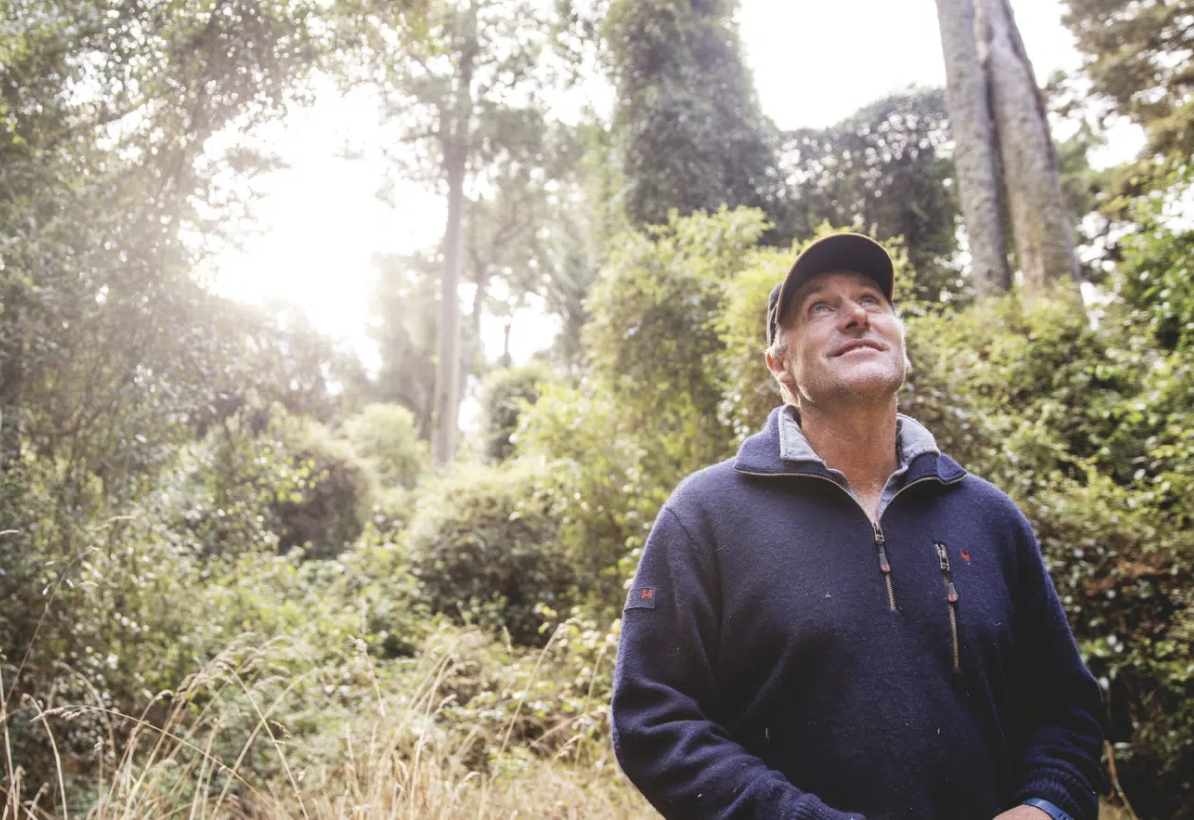
Greg Hart explains in On The Land magazine how trees and pasture can earn carbon credits on a farm. More
The problem: trees don’t pay
Restoring the land meant Greg and Rachel wanted to plant more trees - but not just more pine. As Greg told On The Land magazine:
“Planting natives doesn’t make a lot of financial sense. They are more expensive to plant, and their slower growth means pine trees sequester carbon more quickly in the short term while earning far more carbon credits.”
A creative plan
So Greg went looking for someone to share the cost. In late 2007 he rang Air New Zealand with an idea: turn Airpoints into trees. The airline was in the middle of setting up its Environment Trust and needed a first project. Mangarara became that pilot: with 85,000 trees planted over three years, most of them natives, on steep, erosion-prone hills. Part of the deal was keeping the farm open, so anyone can still enjoy them today through kilometres of walking trails and mountain-biking tracks.
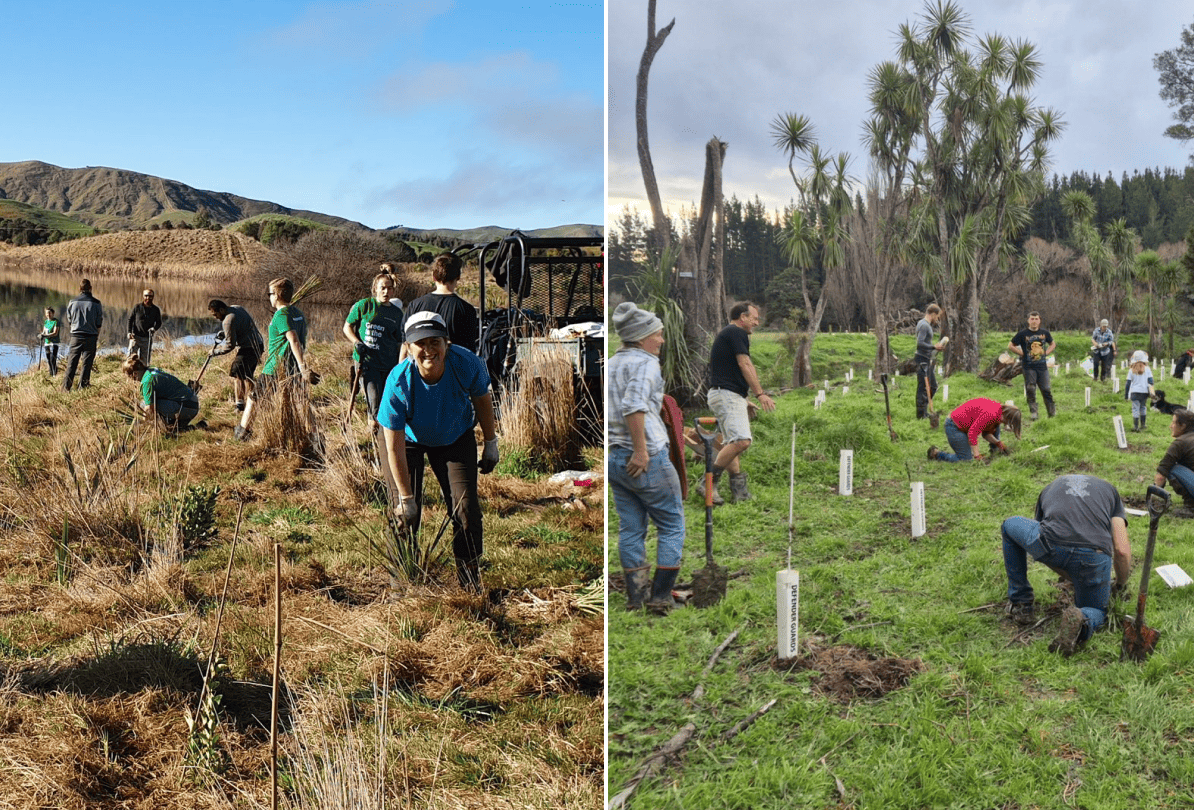
Many hands make a forest. Locals, schools and organisations return to the farm again and again to plant.
The third way: Silvopasture
Natives were only the start. To make trees pay their way, the Harts looked for species that could live alongside their cattle. “That’s what led us to silvopasture,” Greg says.
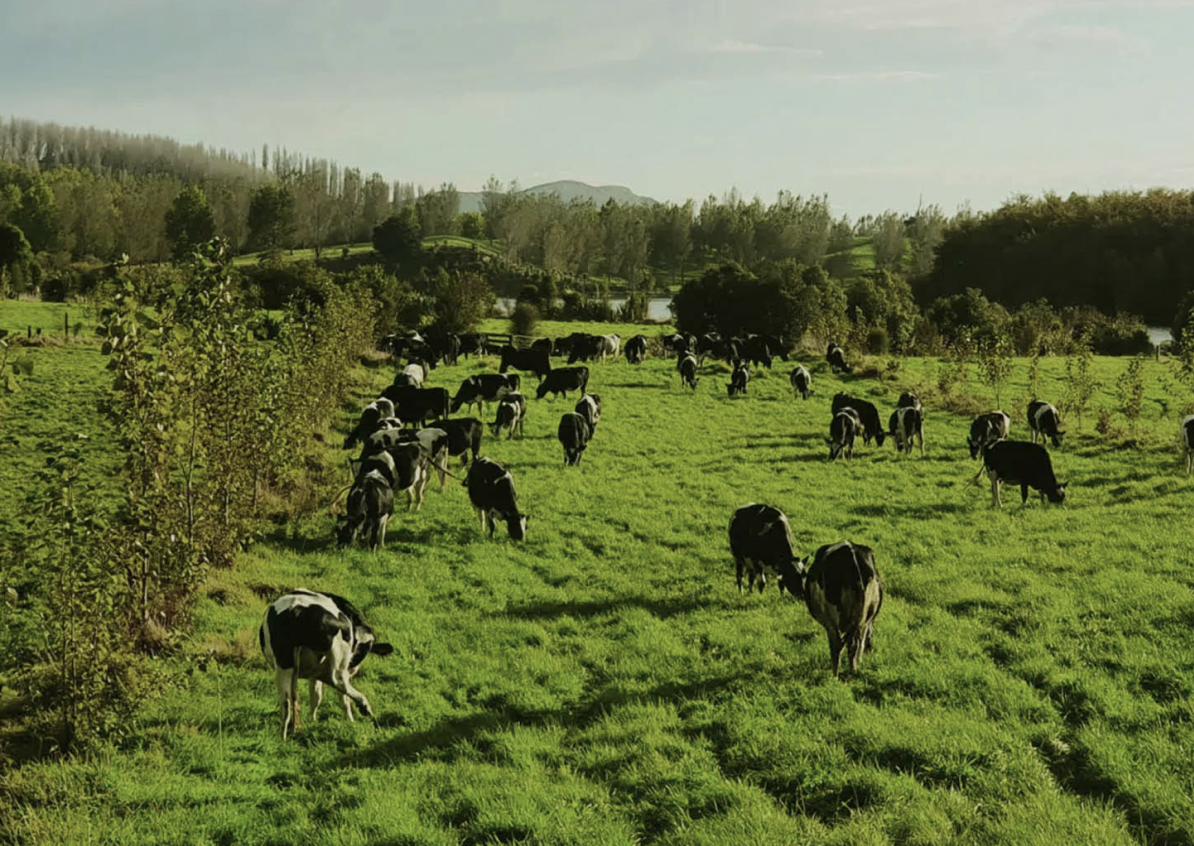
Instead of fencing paddocks off for forest, silvopasture plants trees through the pasture. At Mangarara, rows of poplar, willow and other deciduous hardwoods run 20 metres apart, with natives, fodder trees and fruit and nut trees tucked between. The cattle are free to graze the wide alleys.
The trees give stock shade, shelter and fodder in a drought - while also helping to hold the hills together. The poles are planted densely enough to qualify for carbon credits - earning the income that natives alone never could.
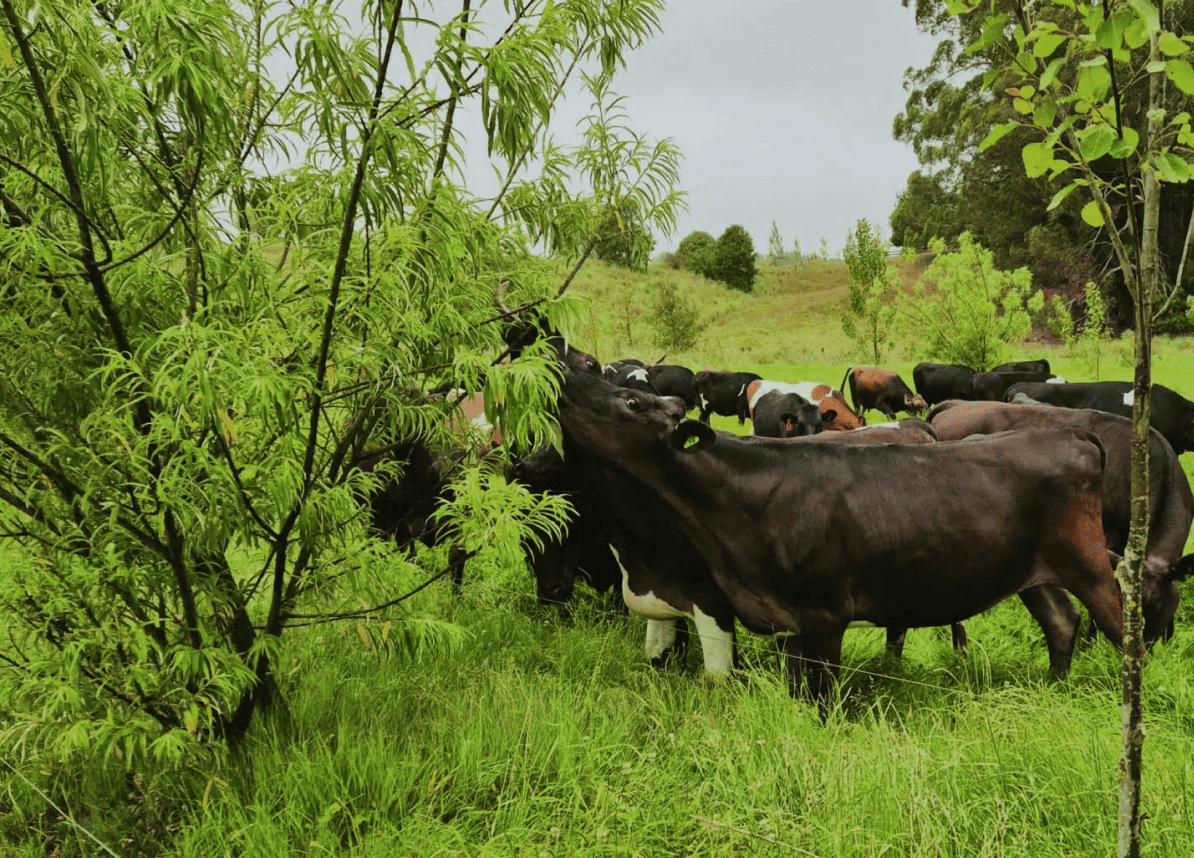
Cattle graze beneath willow and poplar - shade and shelter on the same paddock.
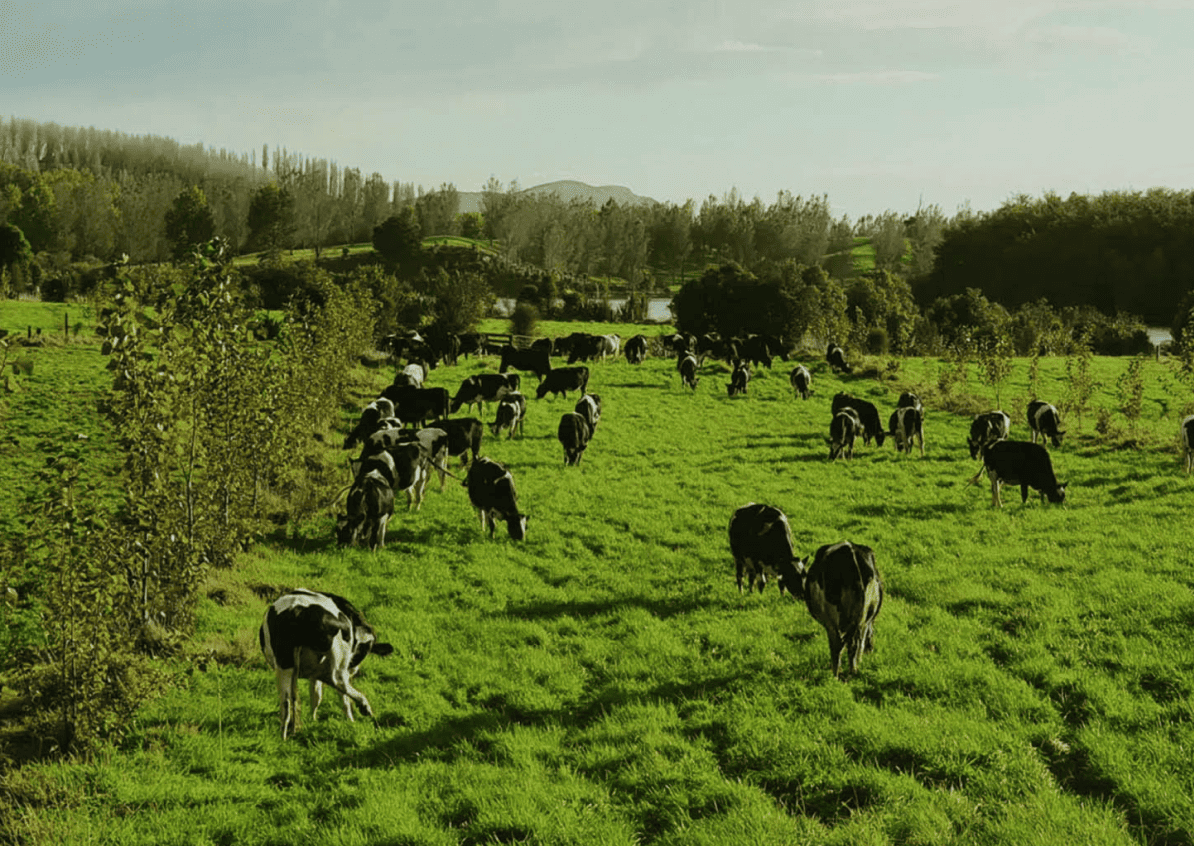
Rows 20 metres apart leave wide alleys for grazing, with fodder, fruit and nut trees between the poles.
What twenty years has grown
In two decades Greg and Rachel have turned a traditional sheep station into a diverse, integrated farm - one that balances restoring the land with growing healthy, nutritious food. The results speak for themselves:
• 135,000+ trees planted since 2008, most of them native
• Fertiliser needs halved compared with the old sheep system
• More carbon stored than emitted, on Ag Matters figures
• Regenerative Angus beef, sold direct to butchers and local families
• Locally owned, after New Zealand investors replaced its bank debt in 2021
A farm others learn from
Results like these draw a crowd. Farmers come from across the country to see the rows for themselves - including the team from Mangaroa Farms, who came home with Greg's silvopasture plan in their notebooks and are now bringing it to the Hutt Valley. Volunteers and Air New Zealand's Green Team keep returning to plant.
Stay in the Eco Lodge
Many of them stay at the Eco Lodge on the shore of Horseshoe Lake. Built in 2015 from two retired classrooms from a local high school, and finished in earth plaster and macrocarpa grown and milled on the farm, it hosts workshops, retreats and families who come to feed pigs, collect eggs and spend a weekend on the farm.
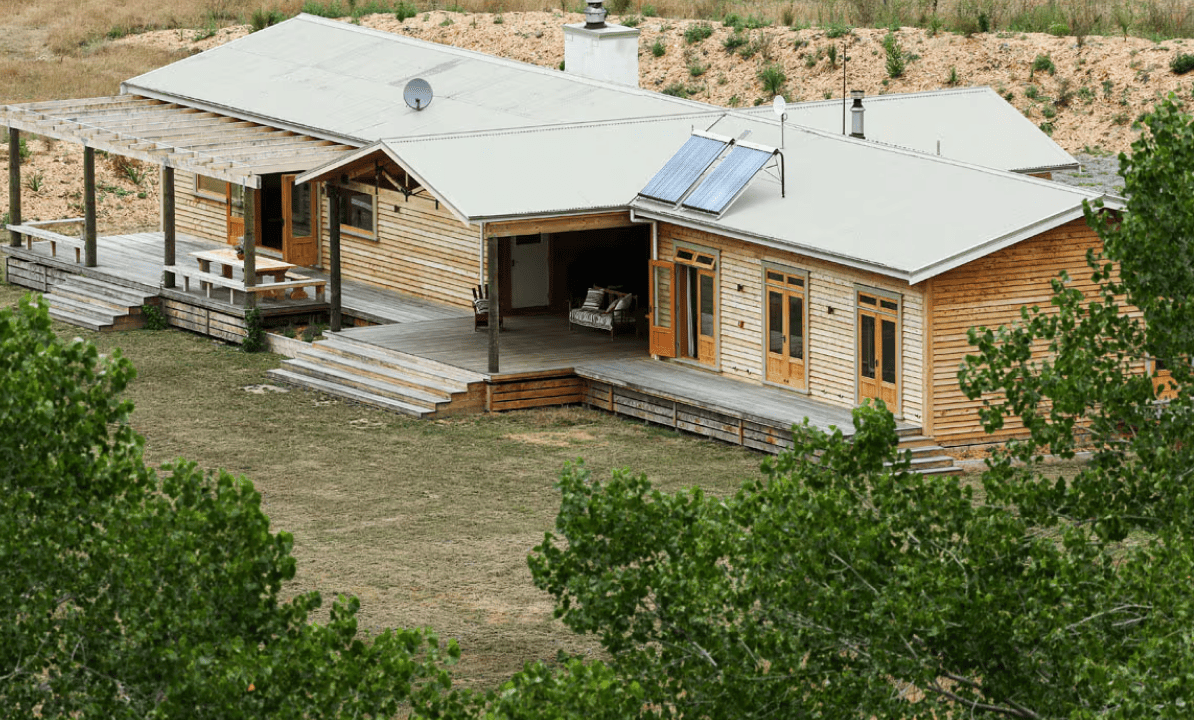
Solar hot water, a wood-fired boiler and a deck looking out over the lake. Book a stay.
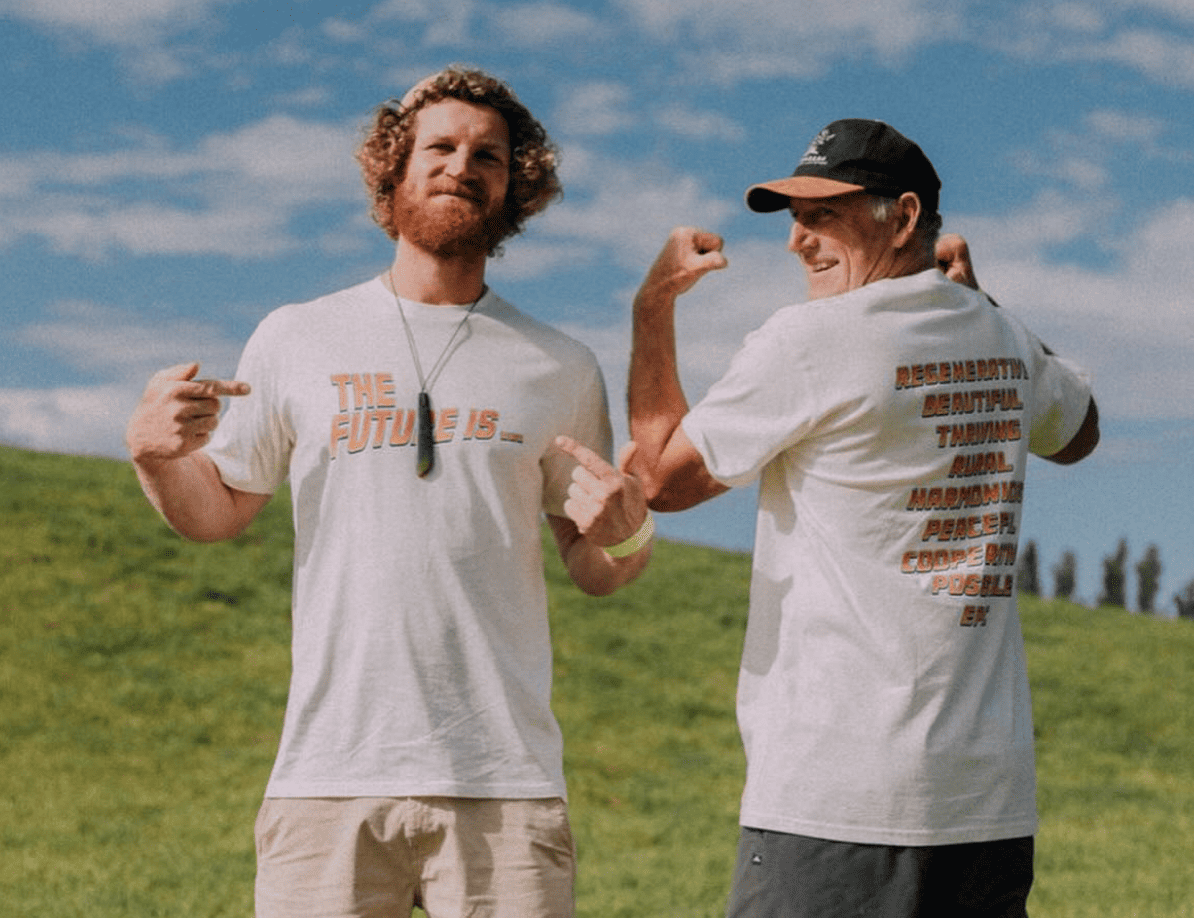
Zebulon Horrell (Mangaroa Farms) with Greg Hart at Underground Festival for their The Future is Regenerative talk.
The Regeneration Nation
For Greg, every visitor who leaves with an idea is part of something bigger. He firmly believes that Aotearoa, with its small population and kind climate, could become the world's first Regeneration Nation. "If we aim for anything less than paradise, that is what we will get," he wrote in BayBuzz.
On the ground at Mangarara, the next steps are already mapped out: more native forest, more silvopasture, and a forest of kai in the paddock beside the Eco Lodge.
The Harts are proud to say Mangarara is far from finished. That is the point. It is not a showpiece, but a working farm learning out loud, and handing its methods to anyone who drives up the dirt road.
That is what farming in service to life means: a farm that feeds people, heals the land and keeps growing.
Below you'll find our latest giftee updates and news from across the community.
Ngā mihi aroha,
Biome Trust
Giftee Updates
Papawhakaritorito Trust planted natives on the whenua to bring birdsong back to its forests, with funding from Ma Earth. More
Kelmarna Community Farm opens its summer seedling sale on Saturday 10 October, with ready-made organic boxes from $50 to pre-order. More
Kōanga Institute suggests Jerusalem Artichokes and Comfrey as carbon & nutrient sources for garden resilience and self reliance. More
Roebuck Farm cuts radish microgreens by hand and has them on local Taranaki shelves the same day. More
Organics Aotearoa graded every political party on their commitment to organics. More
Tīwaiwaka’s Pa McGowan notes the kumarahou flowering earlier than last year in Tauranga Moana - giving us clues about the season to come. More
UNDERGROUND Festival returns 10-11 March 2027 with 40-plus soil sessions on a new host farm, Wholly Cow in Te Miro. More
Wairarapa Earth School hosted a workshop on food forest design, mulching a fruit tree guild and opening the beehives. More
Waiheke Marine Project enables more Kelp Gardeners in the water at Waiheke’s Enclosure Bay, growing the kelp māra toward a ngahere. More
Conservation Volunteers NZ closed its Greater Wellington tree planting season with 2,213 plants in the ground at Mangaroa Farms. More
Go Eco Waikato launched Zero Waste Kirikiriroa with Hamilton City Council, marking the first time the council has funded community organisations directly from the landfill levy. More
Mangaroa Farms opens a new disc golf course by the shop on 17 October, launching alongside the Mangaroa butchery BBQ. More
The Learning Environment opened the Taiao Office, a retrofitted shipping container base for the native nursery, enabled by the PiF Foundation. More
Common Unity moves from Waiwhetū Road and reopens down the road in February 2027. More
Kaicycle gathered in the māra for Te Wiki o te Reo Māori to plant kākano, sing waiata and learn kupu together. More
Permaculture in New Zealand shared a permaculture phrase in te reo Māori each day of Te Wiki o te Reo Māori. More
Additional News
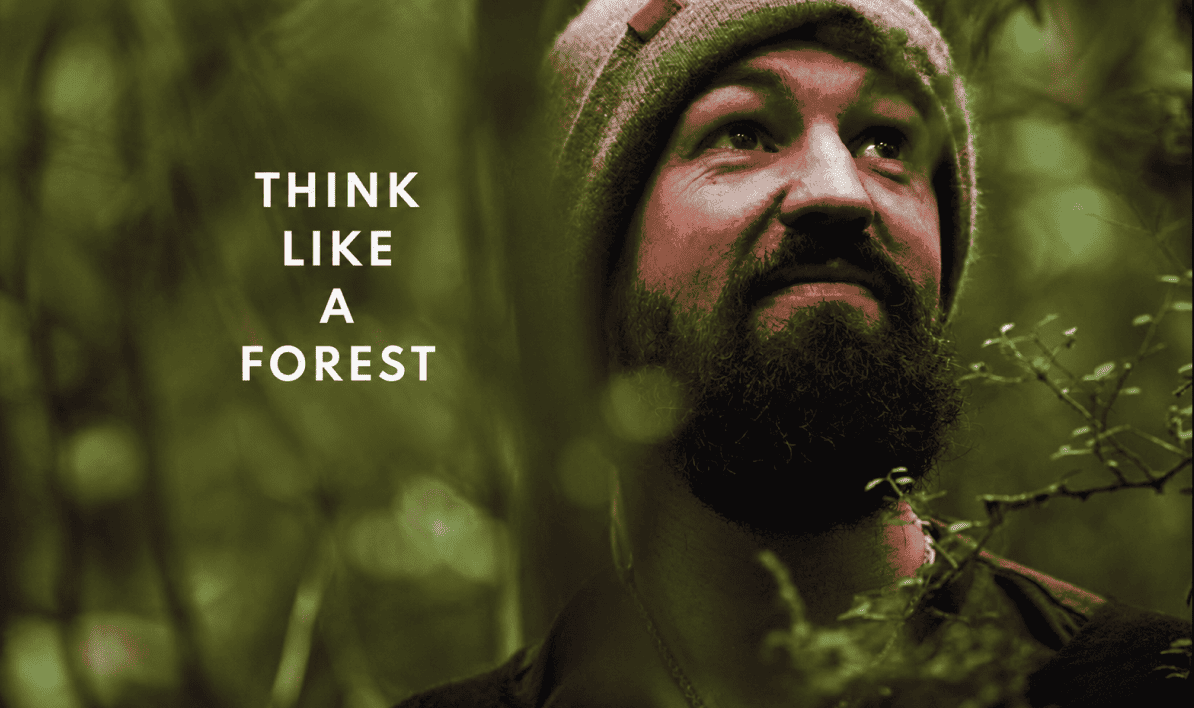
Think Like a Forest - 36 minfilm featuring Sam the Trap Man, by PureAdvantage has received increasingly positive reviews. Watch
Predator Free New Zealand reports kākāriki karaka, our rarest parakeet, up by almost 100 birds in a year at The Brook Waimārama Sanctuary in Nelson. More
Waikato catchment restoration planted 559,019 natives across eight zones last season, with 155km of new fencing and 1,455ha of land retired. More
The Electricity Authority opened Aotearoa’s first regulatory sandbox in Queenstown-Lakes, relaxing rules so households can test energy ideas. More